Recurring tension: what to note after a session
Context, sleep, training load, and daily sensations help give meaning to a painted zone.
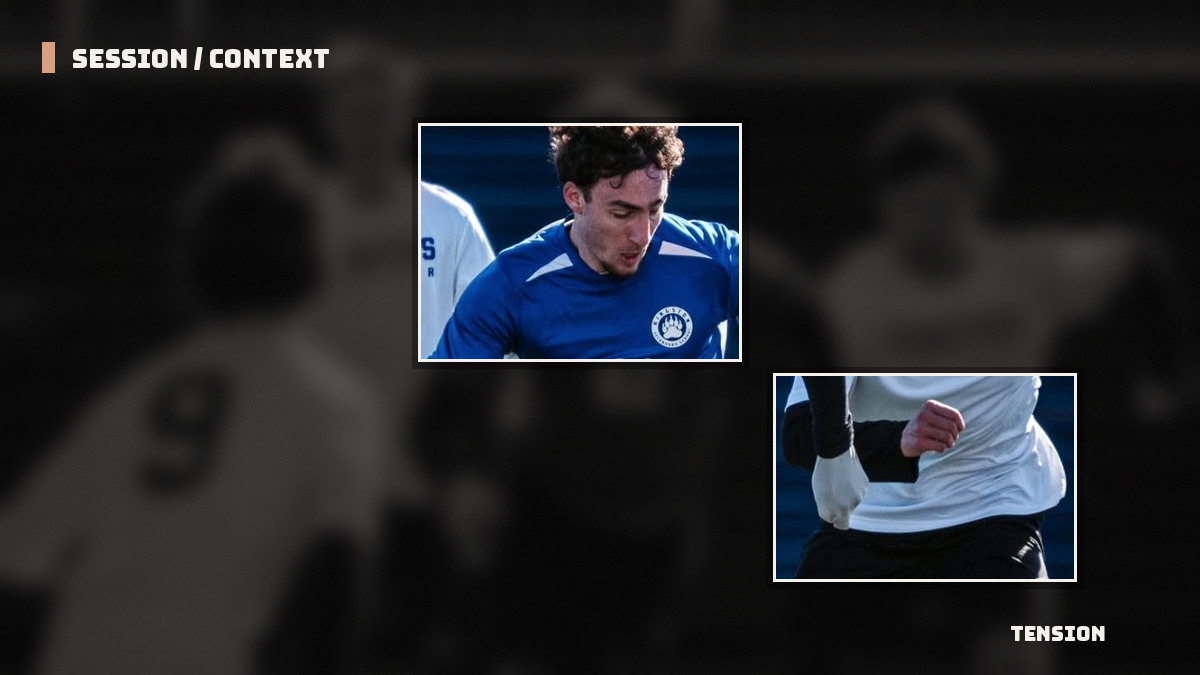
Start with the training session
A painted zone becomes more useful when it is connected to context. Record the sport, session type, duration, and the one or two load details you can capture consistently: distance and pace for running, sets and working weight for strength training, or time and effort for cycling.
Then add the exact zone, intensity on the same scale, when the sensation appeared, and whether it changed during or after the session. A short, repeatable entry is more useful than a detailed diary you abandon after three days.
Keep context factual and comparable
Equipment, surface, a recent change in volume, time away from training, fatigue, and sleep may be worth noting when they are genuinely different. Treat these as context, not explanations. Seeing pain after a new pair of shoes does not prove the shoes caused it.
Patterns often emerge in ordinary details: the same knee zone after several long runs, a shoulder sensation during one pressing variation, or lower-back tension late in repeated lifting sessions. Compare similar workouts and look for recurrence, not a single coincidence.
Know when a log is not enough
A workout pain log cannot diagnose an injury or tell an athlete whether to train through a symptom. Its value is memory: a cleaner account of location, timing, intensity, session context, and change that can support better questions.
The goal is not to over-analyze every signal. TENSION does not provide medical advice, diagnosis, or treatment. Stop relying on the log alone and seek appropriate professional care for sudden, severe, worsening, persistent, or function-limiting pain.
Read the IOC consensus statement on training load and injury risk - The consensus discusses the complexity of load, recovery, health, and injury rather than treating one metric as a complete explanation.
Build a useful workout pain log
Start with exact body-zone mapping, compare the pattern with the gym injury evidence summary, then learn how to share the history with a professional.
Open Case for Athletes